


What to do when kids leave home?
When kids leave home, do less rather than more at first. Let the house feel strange, notice what time and money have opened up, and resist filling the silence immediately. As of November 18, 2026, this question arrives often, and the honest answer is that a season of noticing serves you better than a month of action.
The first move is to resist the urge to redecorate every bedroom or book a dramatic trip in the first month. Give yourself a season to notice what you actually miss and what you do not.
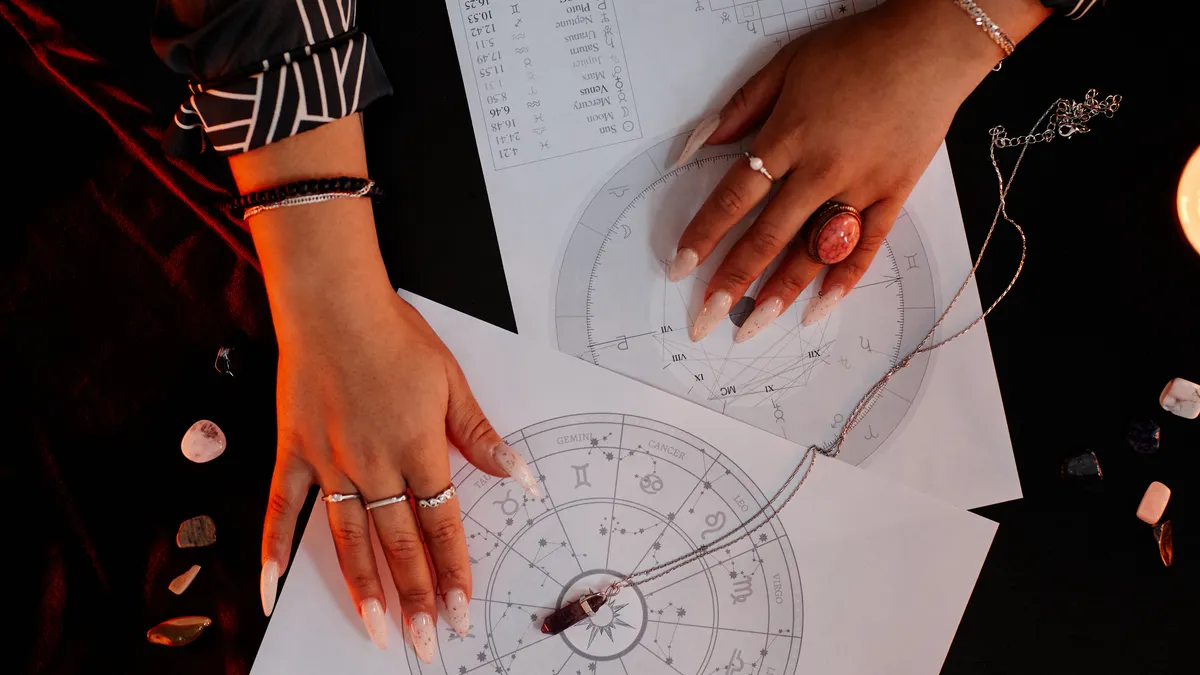
In astrology, Saturn is the planet of structure, limits and long commitments. The fourth house of your chart governs home and family life, so when a child leaves, that house often feels emptied out even though nothing there has technically changed. Sit with that gap before you decide what replaces it.
Write down three things that used to organize your day around your children. Driving schedules, meal planning, homework hours. Those gaps are not failures to fill immediately, they are information about where your attention is now free to go.
What age do most kids leave home?
Most young adults in the United States leave the family home somewhere between eighteen and twenty five, though the range is wide and increasingly delayed by cost of living and education timelines. There is no fixed astrological age for this, since it depends on each family’s circumstances rather than a single planetary signal. What matters more for you is the inner timing, not the calendar one.
Some parents feel the shift early, when a child moves away for college at eighteen. Others feel it later, closer to their child’s mid twenties, when the last visit home becomes less frequent. Either way, the astrological weather around you, particularly Saturn’s position, often tells you more about how ready you feel than the birthday on the calendar does.
What to do after kids leave home?
Life after kids leave home asks for a different kind of planning than the years before it. You are not filling a void so much as reclaiming a shape that existed before parenting took most of the room. This is a decision point, not a drift.
Start with the fourth house again, since it also includes your sense of inner foundation, not just the physical house. Ask what “home” means to you now that it is not primarily a container for other people’s needs. For some, that means staying in the same house and changing how the rooms are used. For others, it means selling, downsizing, or moving somewhere that was never practical with children underfoot.
The sixth house, which governs daily work and health routines, often wants attention here too. Many parents discover their own habits around sleep, exercise and food were built entirely around someone else’s schedule. Rebuilding those routines deliberately, rather than letting them default to old patterns, tends to matter more than any single grand gesture.
If you are also facing a marriage that has changed shape alongside the empty rooms, the piece on gray divorce after fifty looks at that specific crossing in more detail.
How does Saturn’s return shape this transition?
Saturn returns to its natal position about every twenty nine and a half years, with the first return landing around ages twenty seven to thirty and the second around fifty seven to sixty. This is called a Saturn return, a period when the planet revisits the exact degree it held at your birth and asks you to account for the structures you have built. For many parents, the empty nest arrives close to the second Saturn return, which compounds the sense of reckoning.
Saturn also squares your natal Saturn, a tense ninety degree angle, around ages thirty six to thirty seven and again around fifty one to fifty two. It opposes your natal Saturn, a direct one hundred eighty degree angle, around ages fourteen to fifteen and forty four to forty five. If your children left home near one of these windows, the weight you feel may be two transitions arriving at once, not one.
You can check your own chart’s current Saturn placement using ephemeris tables at astro.com, which lists planetary positions for any date you choose. Knowing where Saturn sits in your chart right now helps explain why this particular autumn feels heavier or lighter than expected. It will not tell you what to do, but it names the pressure accurately.
Chiron, the asteroid associated with old wounds and the work of integrating them, returns to its natal position around age fifty. If your nest emptied near that age, grief over the wound of being needed less can surface alongside real relief. Both feelings are allowed to sit in the same week.
Uranus, the planet of sudden change and individuation, opposes its own natal position around age forty two. Parents who hit this opposition just as an older child leaves for college sometimes describe it as two earthquakes at once, their own restlessness and their household’s rearrangement. That timing is coincidence in the literal sense, but it is not meaningless.

What should the first ninety days look like?
The first three months after a child leaves are rarely the right time for permanent decisions. Give yourself room to feel disoriented without treating disorientation as a problem to solve immediately. Small, reversible experiments serve you better than large, irreversible ones.
Try one new daily rhythm rather than overhauling the whole week. Eat dinner at a different time. Take the evening walk you kept postponing. Notice what tenth house themes, meaning your career and public role, have quietly been waiting for more of your attention.
Below is a short table of astrological windows ahead, useful if you want to time bigger moves rather than rush them.
| Date | Transit | What it may support |
|---|---|---|
| November 25, 2026 | Mars enters Virgo | Sorting, planning, practical first steps |
| December 4, 2026 | Venus enters Scorpio | Deeper reflection on what you want now |
| January 7, 2027 | Venus enters Sagittarius | Appetite for travel, study, new horizons |
| July 26, 2027 | Jupiter enters Virgo | Expansion in daily routines and health |
| September 1, 2027 | Mars enters Scorpio | Renewed drive toward shared resources or deeper work |
These five windows are not promises of outcomes, only periods when the planetary weather tends to favor certain kinds of movement over others. Mars in Virgo favors the practical sorting of a house or a schedule. Venus in Scorpio favors honest conversations about what you actually want, including with a partner whose own fourth house has just emptied too.
Should I make big changes right away?
Not usually, and rarely out of panic. The eighth house of shared resources and the seventh house of partnership often need attention before the tenth house of career does, especially if you share a home or finances with someone else. Talk through money and space before you talk through ambition.
If you are single, or newly reconsidering partnership after years of focusing on children, the question of whether companionship is still possible deserves its own honest look. The piece on finding love again after a long pause addresses that directly, without promising a particular result.
Quick decisions made from grief or restlessness tend to need revisiting within a year. Decisions made after a full season of noticing, even unglamorous ones like changing a daily walk or starting an old hobby again, tend to hold. “The nest is not a trap, it is a stage,” wrote one longtime reader describing her own fiftieth year.
What if the house still feels too quiet?
A quiet house is not a failure of adjustment, it is simply the accurate sound of a changed stage of life. Some parents fill it with new people, new work, new rooms. Others learn to live inside the quiet itself, which is its own legitimate choice.
If the quiet feels unbearable rather than simply unfamiliar, that distinction matters. Ordinary disorientation tends to ease within a season. If it does not ease, that is worth naming plainly to someone you trust, separate from anything astrology can map.
You do not need a grand plan by next month. The second act work on this site is built around exactly this kind of slower unfolding, where the chart offers language for a season rather than a verdict on it. For a fuller map of your own fourth house, Saturn placement and the years ahead, the full chart reading walks through it in more depth, and more on how this work is approached is available if you want the reasoning behind it.
This transition, like most second act crossings, rewards patience more than speed. Life after kids leave home is not a problem with one correct solution, it is a long room you get to furnish slowly, on your own schedule, with whatever structure Saturn is currently asking you to rebuild.